
Undersea Cable Project
Case Studies · 2026/9/15 · 17 views
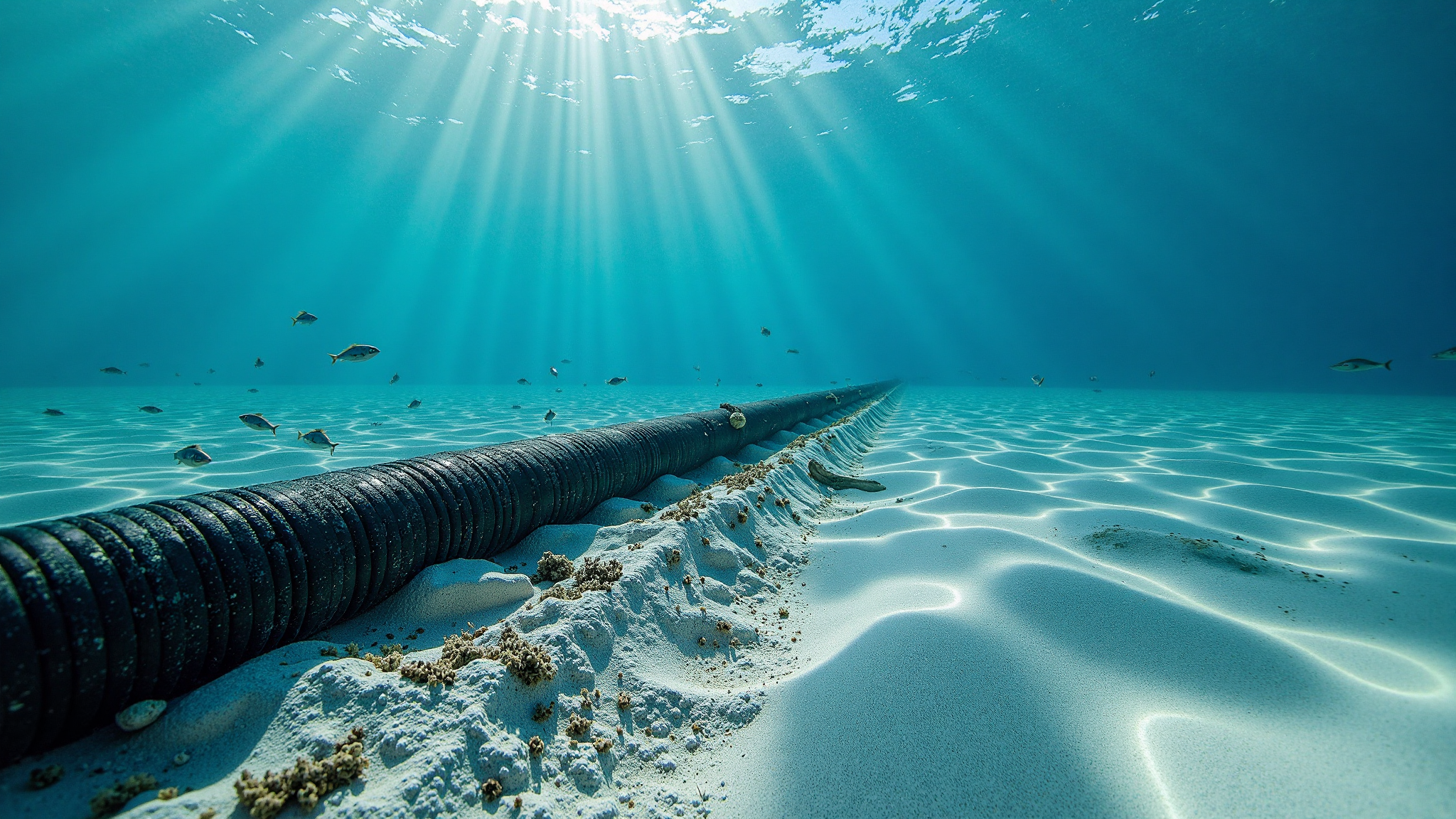
HMDA submarine fiber optic cables deployed for a 45 km cross-sea link connecting an island municipality to the mainland fiber network, supporting 100 Gbps backbone capacity.

Project Background
An island municipality with a growing tourism economy and offshore aquaculture industry needed reliable high-bandwidth connectivity to the mainland. The existing microwave link provided only 1 Gbps shared capacity and suffered frequent outages during typhoon season. A submarine fiber optic cable was the only viable solution for delivering the 100 Gbps backbone capacity required for the island's digital transformation.
Cable Specification Comparison
Three cable designs were evaluated for the 45 km sea crossing. The selection criteria balanced mechanical survivability, optical performance, and total cost of ownership over a 25-year design life.
| Feature | Light Armor | Double Armor (Selected) | Deep-Sea Type |
|---|---|---|---|
| Water Depth Rating | 200m | 1000m | 5000m |
| Armor Wire Diameter | 3.0mm | 5.0mm + 3.0mm inner | 6.0mm single |
| Tensile Strength | 80 kN | 150 kN | 200 kN |
| Crush Resistance | 40 kN/m | 100 kN/m | 60 kN/m |
| Fiber Count | 48F | 96F | 48F |
| Unit Cost (per km) | ¥180,000 | ¥320,000 | ¥450,000 |
The double armor design was selected because the route crossed active fishing zones and a busy shipping channel, requiring maximum protection against anchor drops and trawl gear contact. The 96-fiber count also provided ample spare capacity for future bandwidth growth.
Installation and Commissioning
The cable was loaded onto a specialized cable-laying vessel and installed over 5 working days. Marine plough burial was used in the shallow-water approach zones (0-5m depth) to protect against fishing activities, while the deep-water section was laid directly on the seabed with GPS-tracked route verification.

Post-installation OTDR testing confirmed all 96 fibers met the 0.22 dB/km attenuation specification at 1550nm. The link was commissioned with 100G coherent DWDM equipment, delivering 8.4 Tbps of usable capacity — enough to serve the island's connectivity needs for the next two decades.